



 Dublin Kitchens

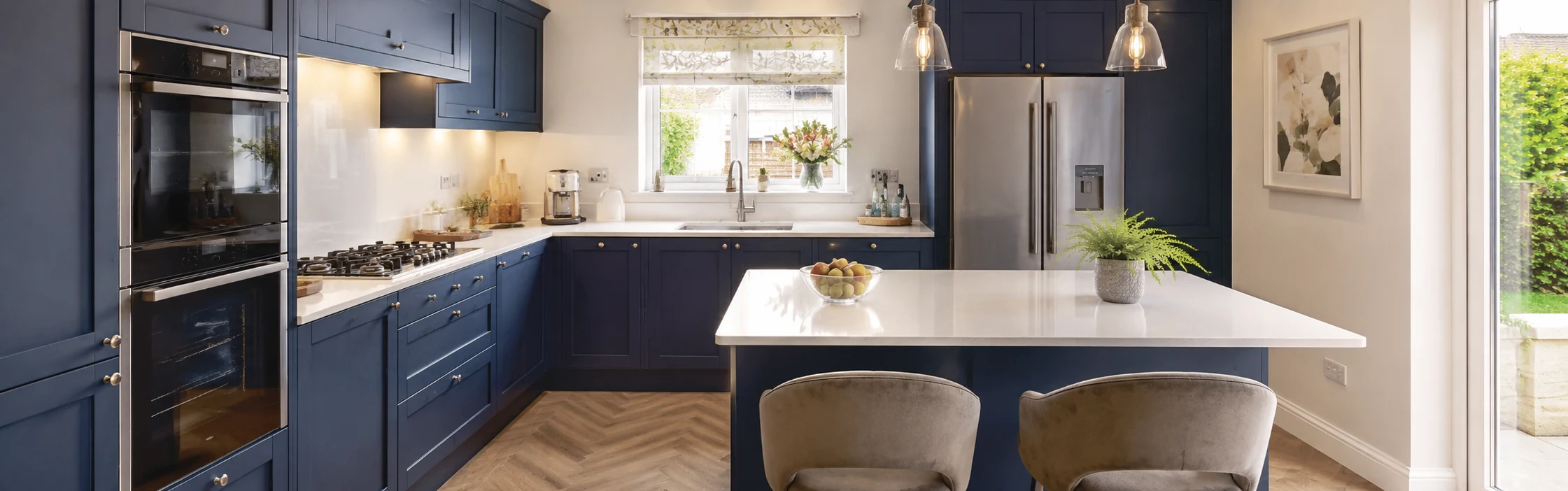
Good kitchen planning starts long before choosing a door colour, handle or worktop sample. The layout, measurements, storage, appliance positions, lighting and installation sequence all have a bigger effect on the final result than many homeowners expect.
In real kitchen projects, most expensive problems begin at the planning stage. A dishwasher door clashes with a corner unit. A fridge is placed too far from the preparation area. The island looks good on a drawing but leaves the walkway too tight. Sockets are missing beside the kettle and coffee machine. The worktop is selected before the sink and hob have been confirmed. These issues are avoidable with proper kitchen design planning.
This Kitchen Planning Guide Ireland is for homeowners planning a new kitchen, renovation, extension kitchen or cabinet replacement. It explains how to plan a kitchen in a practical order, with advice for Irish homes where room shapes, older walls, access and services often need careful review.
Why Kitchen Planning Matters
The kitchen is one of the most used rooms in the home. It is also one of the most expensive rooms to change. Cabinets, worktops, appliances, plumbing, electrics, lighting and installation all need to work together. If one part is planned badly, it can affect the rest of the project.
A good plan helps you spend your budget in the right places. For some homes, the best investment is better storage. For others, it is a stronger worktop, improved lighting or a fitted kitchen that deals properly with uneven walls and awkward corners.
Planning also improves daily use. A kitchen should make cooking, cleaning, preparing school lunches, making coffee, unloading shopping and entertaining easier. A layout that looks impressive but ignores these daily habits will quickly become frustrating.
For Kitchens4U projects, the best results usually come from solving practical questions first: how the household cooks, what needs to be stored, where appliances should sit and how the installation can be completed cleanly.
Start With Your Lifestyle
Before looking at finishes, write down how the kitchen is actually used. A kitchen for one person in an apartment does not need the same layout as a busy family kitchen in a semi-detached Dublin home. A retired couple may value easy access and simple storage. A family with children may need durable surfaces, breakfast seating and space for school bags, snacks and recycling.
Ask these questions at the start:
- How many people use the kitchen every day?
- Does someone cook daily, or is the kitchen mainly used for light meals?
- Do two people often cook at the same time?
- Do you host family or guests?
- Do children need a breakfast area or homework space?
- Do pets need feeding space or floor clearance?
- Do you want the kitchen open to dining or living areas?
- Which small appliances stay on the worktop every day?
A practical example: if a client uses an air fryer, kettle and coffee machine daily, the design should allow a clear appliance zone with sockets and enough worktop depth. Pretending every appliance will be hidden away often leads to clutter after the kitchen is finished.
A household that cooks from scratch may need deep pan drawers beside the hob, a tall larder near the prep area and a good recycling system. A household that mostly heats meals may prefer easier appliance access and more general storage.
Set Your Kitchen Budget Before Designing
Budget should be discussed early, not after the design is finished. If the budget is unclear, it is easy to design a kitchen that looks attractive but cannot be built within the planned spend. Setting a realistic range helps the designer recommend the right cabinet type, worktop, appliance level and installation route.
For a deeper breakdown, see our Kitchen Cost Guide Ireland. As a broad planning guide, the following ranges are useful starting points.
Budget Kitchen
A budget kitchen may sit around EUR4,000 – EUR8,000 for a simple supply-focused project. It often uses flat pack or basic cabinet options, standard sizes, laminate worktops and limited layout changes. This can work well for apartments, rental properties and utility spaces.
Mid-Range Kitchen
A mid-range kitchen may sit around EUR8,000 – EUR18,000. This is where many Irish homeowners land for practical renovations. It may include pre-assembled or fitted cabinets, better finishes, laminate or entry-level quartz worktops, a new sink and tap, and professional fitting.
Premium Kitchen
A premium kitchen may sit around EUR18,000 – EUR35,000, depending on size and specification. This budget can allow for a larger fitted layout, quartz worktops, integrated appliances, better storage, lighting and a more detailed installation.
Bespoke Kitchen
A bespoke kitchen can cost EUR35,000 – EUR60,000+ where custom cabinetry, specialist finishes, high-end appliances, stone worktops and complex fitting are involved. This route is usually chosen for unusual spaces or high-spec renovation projects.
Measure Your Kitchen Properly
Accurate measurements are the foundation of good kitchen layout planning. A few millimetres can matter when cabinets, fillers, worktops, appliances and doors all need to align. A rough measurement is useful for early planning, but a proper survey is needed before ordering.
Record the following:
- Wall lengths from corner to corner.
- Door positions, door swing and architraves.
- Window positions, sill height and radiator positions.
- Existing water supply and waste pipe positions.
- Gas, electrical and appliance connection points.
- Extractor or ventilation routes.
- Ceiling height and any bulkheads or sloped ceilings.
- Floor levels, especially in older homes.
Incorrect measurements can cause costly rework. A tall fridge housing may clash with a window trim, a dishwasher may not fit beside pipework, or a worktop may need to be recut. In older Dublin homes, corners are not always square, so fillers, end panels or on-site adjustment may be needed.
Choose The Right Kitchen Layout
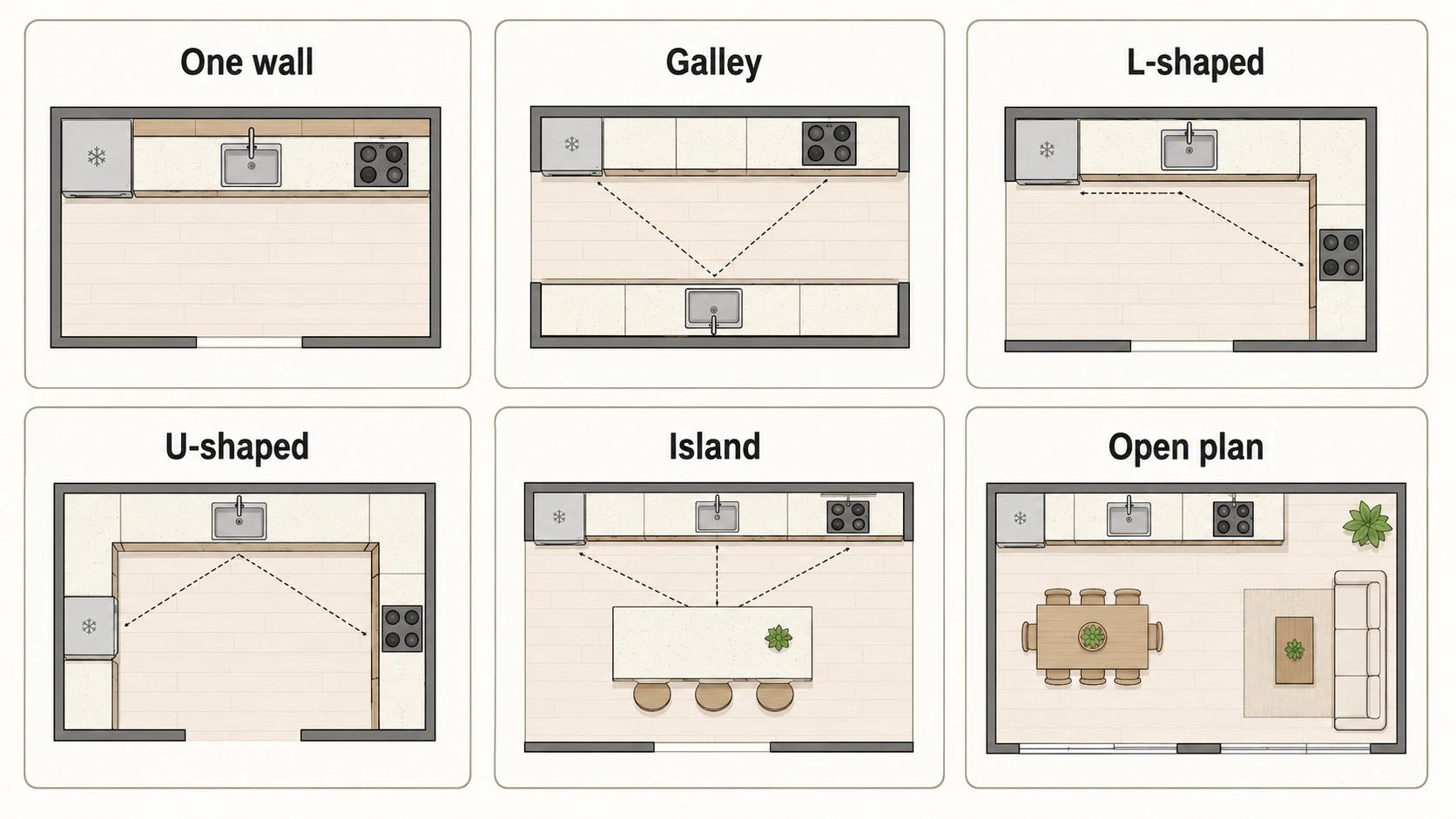
One Wall Kitchen
Advantages: Simple, cost-effective and easy to fit in small spaces.
Disadvantages: Storage and worktop space can be limited. The fridge, sink and hob must be planned carefully so the run does not feel cramped.
Best For: Small apartments, rental homes, compact extensions and utility-style kitchens.
Typical Irish Homes: City apartments, converted spaces and smaller Dublin homes where floor area is limited.
Galley Kitchen
Advantages: Efficient workflow, strong storage potential and good use of narrow rooms.
Disadvantages: The walkway must not be too tight. If cabinets and appliance doors open opposite each other, movement can become awkward.
Best For: Narrow kitchens where a single wall would not provide enough storage.
Typical Irish Homes: Terraced houses, apartments and older homes with long kitchen spaces.
L-Shaped Kitchen
Advantages: Flexible, open and suitable for many room sizes.
Disadvantages: Corner storage needs planning. Without drawers, pull-outs or a good corner solution, storage can be wasted.
Best For: Family kitchens, smaller open-plan spaces and homes where the sink and hob can sit on adjacent runs.
Typical Irish Homes: Semi-detached houses, extensions and many standard Dublin renovation projects.
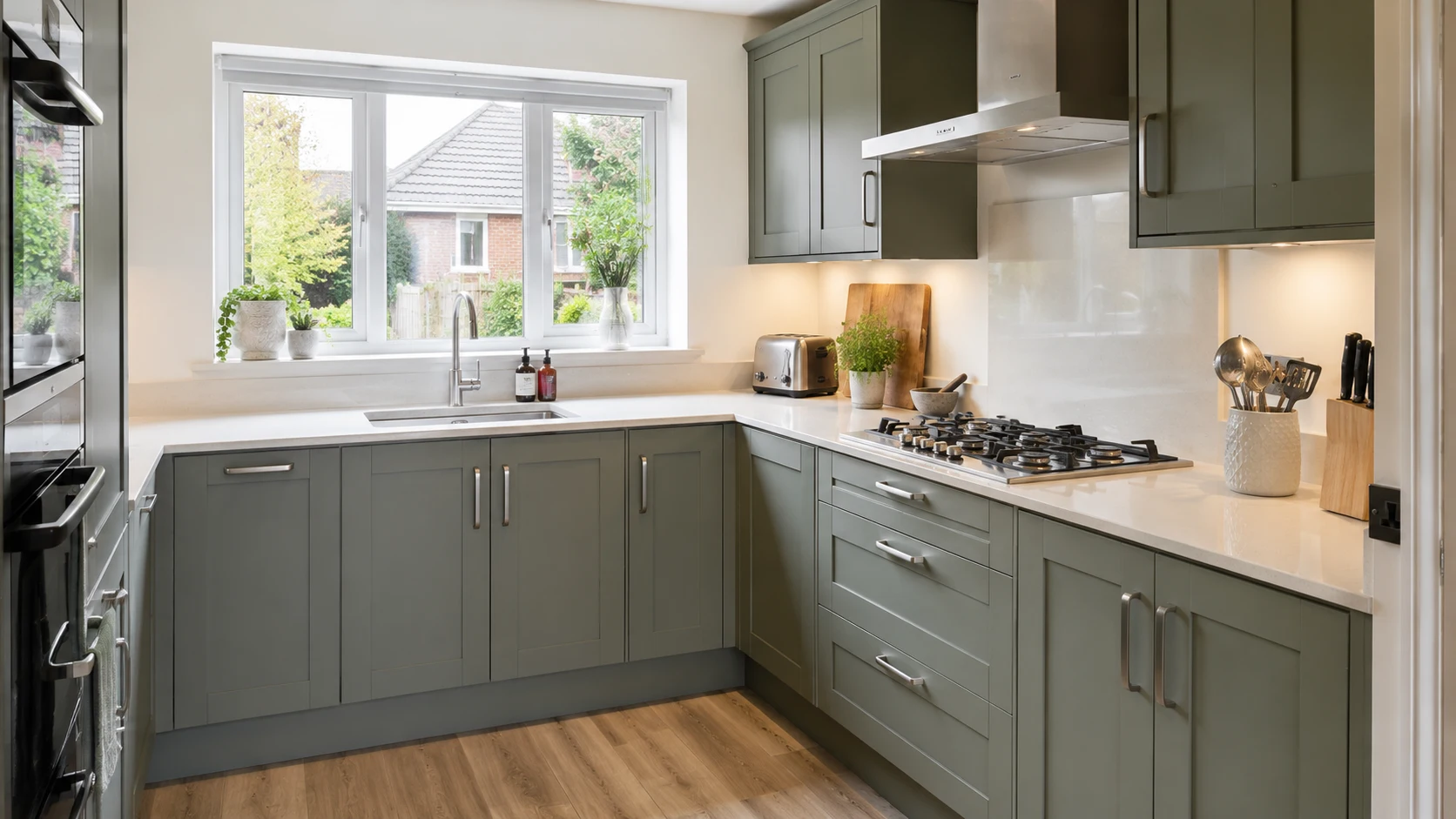
U-Shaped Kitchen
Advantages: Excellent storage and worktop space on three sides.
Disadvantages: It needs enough width for comfortable movement. In a tight room, three sides of cabinetry can feel enclosed.
Best For: Homeowners who cook often and want strong storage without needing an island.
Typical Irish Homes: Older kitchens with defined room boundaries, family homes and rooms where the window wall suits a sink position.
Island Kitchen
Advantages: Adds preparation space, seating and storage.
Disadvantages: It requires generous clearance. An oversized island can block walkways, appliance doors and circulation.
Best For: Larger kitchens, extensions and open-plan homes.
Typical Irish Homes: Modern extensions, detached homes and larger renovation projects where the kitchen is part of the main living area.
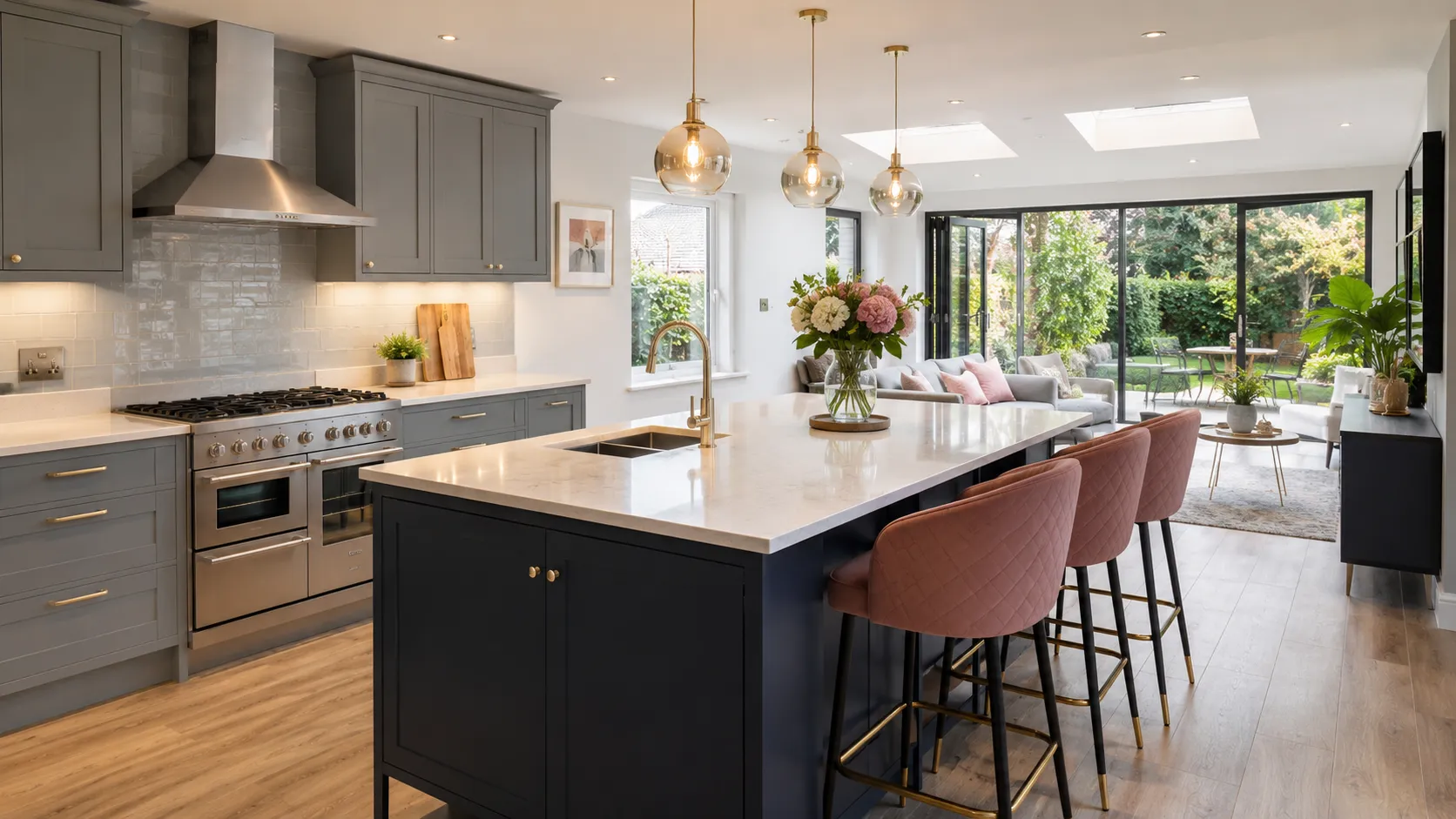
Open Plan Kitchen
Advantages: Creates a social layout where cooking, dining and family activity share one space.
Disadvantages: Noise, smells, storage visibility and lighting must be planned. The kitchen needs to look tidy from the living area.
Best For: Families, extensions and homeowners who want the kitchen to become the centre of daily living.
Typical Irish Homes: Rear extensions, open-plan refurbishments and larger Dublin homes being modernised.
Kitchen Layout Comparison Table
| Layout | Storage | Workflow | Cost | Best For |
|---|---|---|---|---|
| One Wall | Limited to moderate | Simple but needs careful appliance spacing | Usually lower | Small apartments and compact rooms |
| Galley | Good if both sides are used well | Efficient for cooking | Moderate | Narrow kitchens and terraced homes |
| L-Shaped | Good with planned corner storage | Flexible and open | Moderate | Family kitchens and standard renovations |
| U-Shaped | Very strong | Excellent if the room is wide enough | Moderate to high | Busy cooking households |
| Island Kitchen | Strong if island has drawers or cabinets | Good if clearance is generous | Higher | Open-plan kitchens and extensions |
| Open Plan | Depends on cabinet wall and island design | Good for social use | Moderate to high | Kitchen-dining-living spaces |
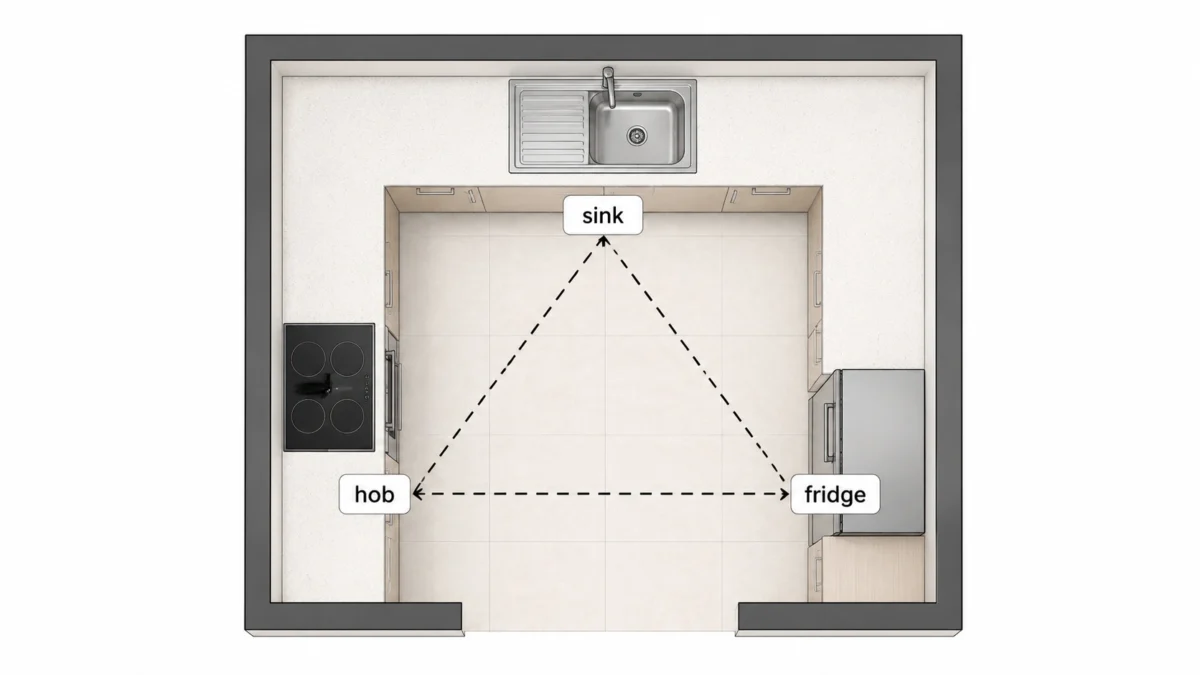
Understanding The Kitchen Work Triangle
The kitchen work triangle connects the sink, hob and fridge. The idea is simple: the main cooking, washing and food storage points should be close enough for efficient use, but not so close that the kitchen feels cramped.
The route between these points should be comfortable, with no major obstacle blocking movement. Avoid placing the fridge at the far end of the room, the sink behind a tight corner, or the hob where people need to pass behind the cook constantly.
Recommended Distances
There is no single measurement that suits every home. In a small kitchen, the points may be close together. In a larger open-plan kitchen, the distance should not become so wide that cooking feels inefficient.
Common Mistakes
- Putting the fridge outside the main cooking area.
- Leaving no preparation space beside the hob.
- Placing the dishwasher where it blocks the sink zone.
- Adding an island that interrupts the main route.
- Forgetting landing space beside ovens and tall appliances.
Modern Adaptations
Modern kitchens often have more than three working points. A coffee station, air fryer zone, recycling area, pantry and breakfast area may all matter. Adapt the triangle to real habits.
Kitchen Storage Planning
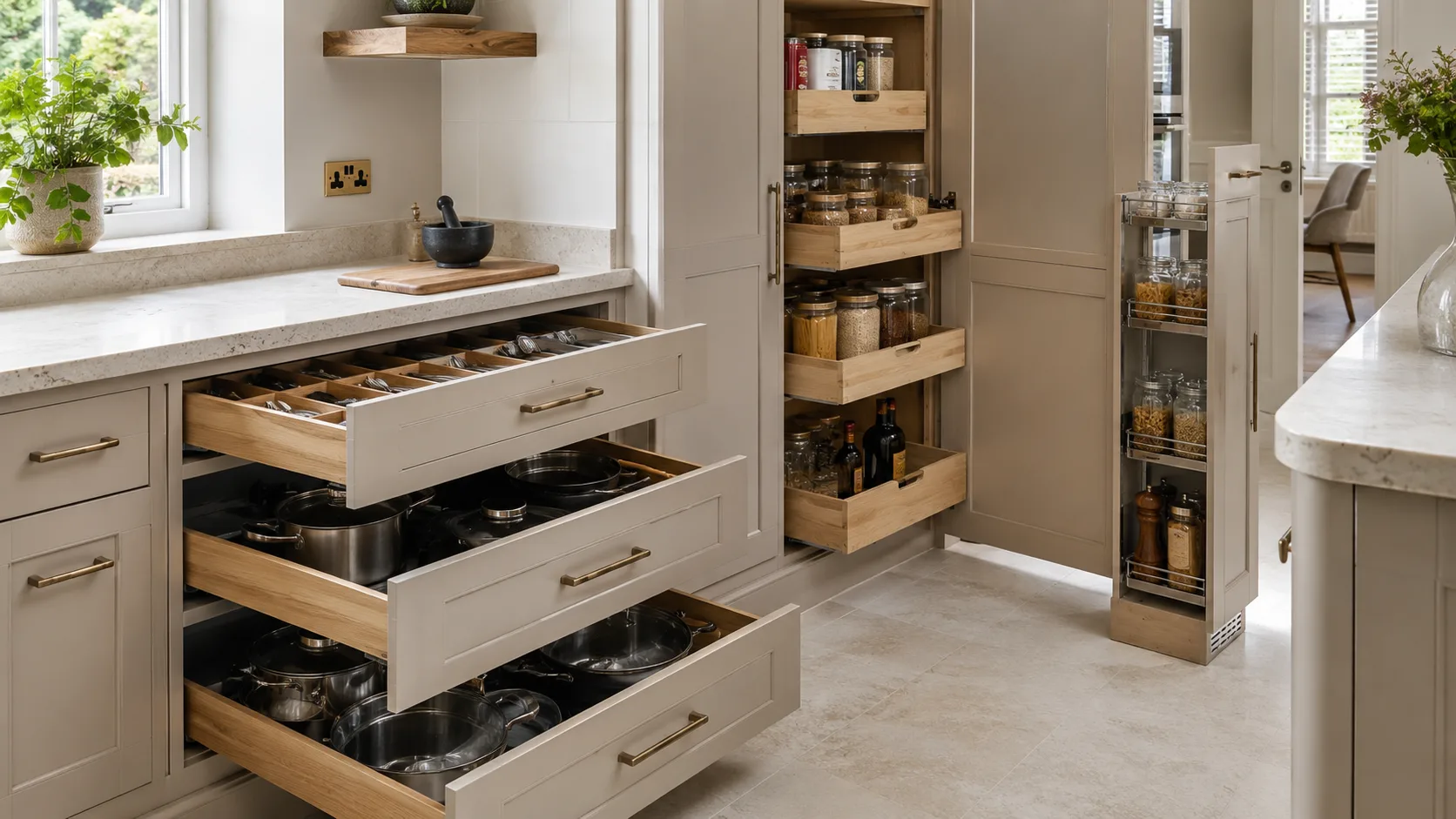
Storage planning is where many kitchens succeed or fail. A compact kitchen can work very well if every cabinet has a clear purpose.
Deep Drawers
Deep drawers are useful for pans, plates, bowls and everyday cooking items. They often make better use of lower cabinet space than standard cupboards because items are easier to see and reach.
Tall Larder Units
A tall larder can hold dry food, small appliances or household supplies. It is especially helpful in homes without a separate pantry.
Pull-Out Storage
Pull-out units can be used for spices, oils, cleaning items or narrow spaces beside appliances. They are practical, but they should be chosen for real use rather than added as a novelty.
Corner Storage
Corners need careful planning. A blind corner, carousel or pull-out corner system can prevent wasted space, but the right choice depends on the cabinet layout and budget.
Pantry Storage
Pantry storage is useful for families and frequent cooks. It can be a full walk-in pantry, a tall pantry cabinet or a simple larder zone near the fridge.
Appliance Storage
If small appliances are used daily, they need planned worktop space and sockets. If they are used occasionally, consider an appliance cupboard or tall storage unit.
Integrated Recycling Units
Waste and recycling should be planned near the prep and sink zone. Integrated bins keep the kitchen tidier and reduce loose bins on the floor.
Breakfast Stations
A breakfast station can group the kettle, coffee machine, toaster, mugs and cereal storage. It works well for busy mornings and keeps traffic away from the main cooking area.
Planning Kitchen Appliances
Appliances should be selected before the final kitchen order because cabinet sizes, ventilation, sockets, plumbing and worktop cut-outs may depend on them.
- Fridge Freezer: Decide between freestanding and integrated. Check door swing, ventilation and nearby landing space.
- Dishwasher: Best placed near the sink where possible. Make sure the open door does not block the main walkway.
- Hob: Needs preparation space nearby and a suitable extractor route.
- Oven: Can sit under the hob or in a tall housing. Eye-level ovens are easier to use but require cabinet planning.
- Microwave: Avoid placing it too high. Built-in options need the right housing and ventilation.
- Extractor: Plan ducting or recirculation early. Poor ventilation can affect comfort and cleaning.
- Wine Cooler: Useful for some homes, but it takes cabinet space and needs ventilation.
- Coffee Machine: If used daily, give it a proper zone with sockets, mugs and bin access nearby.
Kitchen Lighting Planning
Lighting is often left too late. A kitchen needs more than one ceiling light. Good lighting helps with cooking, cleaning, safety and atmosphere.
Ambient Lighting
Ambient lighting provides general brightness across the room. Ceiling lights or recessed downlights can work well if placed evenly.
Task Lighting
Task lighting is used over preparation zones, sinks, hobs and worktops. It should reduce shadows, not create them.
Accent Lighting
Accent lighting can highlight shelves, display areas or textured splashbacks. It should support the design, not distract from it.
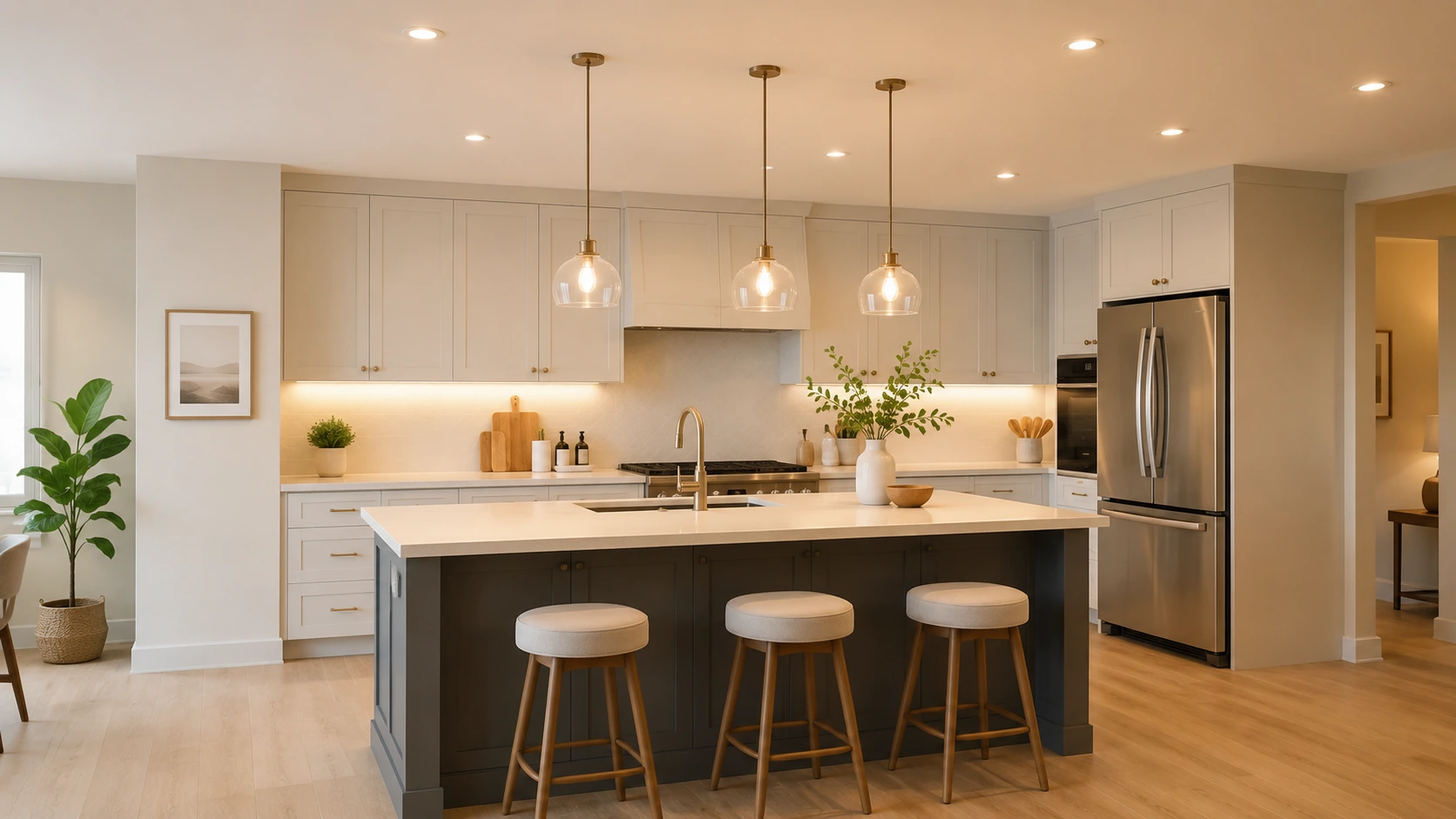
Under Cabinet Lighting
Under cabinet lighting is useful because wall cabinets often cast shadows on the worktop. It is especially helpful in compact or north-facing kitchens.
Island Lighting
Island lighting should suit both preparation and seating. Pendant lights must be positioned so they do not block views or hang too low over the work surface.
Common lighting mistakes include using only one light source, forgetting dimmers, placing pendants before the island size is final, and failing to light the main prep area.
Electrical Planning
Electrical planning should happen before cabinets are ordered and before installation begins. A finished kitchen with too few sockets is difficult to correct neatly.
- Socket Locations: Plan sockets around the kettle, toaster, coffee machine, mixer, air fryer and phone charging.
- USB Sockets: Useful in seating areas or family kitchens, but they should not replace standard sockets where appliances are used.
- Island Sockets: Helpful for laptops, mixers and charging, but they need early planning because cables may need to run under the floor.
- Appliance Connections: Ovens, hobs, extractors, dishwashers and fridge freezers all need the correct connection points.
- Future-Proofing: Add practical spare capacity where sensible. It is cheaper to plan now than to chase walls later.
Kitchen Worktop Planning
Laminate
Laminate is cost-effective, practical and available in many finishes. It suits budget and mid-range kitchens, rental properties and busy family homes. It needs care around heat and water joins, but a good laminate worktop can perform well in everyday use.
Quartz
Quartz costs more than laminate but gives a durable, polished finish. It works well in fitted kitchens, islands and high-use homes. It usually requires templating after cabinets are installed.
Granite
Granite is a natural stone with variation in colour and pattern. It can be strong and attractive, but it needs the right support, sealing and maintenance guidance.
Porcelain
Porcelain is a premium surface option. It can be very durable and visually refined, but it is usually more expensive and requires specialist handling.
Choose the worktop after considering budget, daily use, cleaning habits, sink type, hob type and whether the kitchen includes an island or breakfast bar.
Planning A Kitchen Island
An island can be useful, but only if the room has enough space. The common mistake is choosing an island first, then discovering the kitchen feels tight once cabinet doors, stools and appliance doors are open.
Leave generous clearance around the island so people can pass comfortably. If it has seating, allow space behind the stools. If it includes a hob or sink, plan ventilation, plumbing, electrics and safe working space.
Recommended island dimensions depend on the room, but a very narrow island may not be worth the cost. A peninsula can sometimes be a better option in medium-sized Irish kitchens because it gives seating and worktop space without needing clearance on all four sides.
Do not install an island if it blocks the fridge, dishwasher, oven, main walkway or garden access. A peninsula, L-shaped or U-shaped layout may be more practical.
Kitchen Planning Timeline
| Stage | Typical Time | What Happens |
|---|---|---|
| Initial Consultation | 1 day to 1 week | Discuss needs, budget, style, layout and project scope. |
| Design Phase | 1 to 3 weeks | Measurements, layout options, cabinet planning and material selection. |
| Quotation | Several days to 2 weeks | Pricing is prepared based on the selected design and specification. |
| Ordering | After approval | Cabinets, worktops, accessories and appliances are confirmed. |
| Manufacturing | Varies by range | Cabinets and components are prepared for delivery. |
| Delivery | Scheduled before fitting | Access, storage space and delivery timing are checked. |
| Installation | Several days to 2+ weeks | Old kitchen removal, fitting, worktops, appliances and finishing work. |
| Completion | Final checks | Door alignment, handles, trims, cleaning and any final adjustments. |
15 Common Kitchen Planning Mistakes To Avoid
- Too Few Sockets: Plan sockets around real appliances, not a tidy showroom version of the kitchen.
- Poor Lighting: One ceiling light is rarely enough for cooking and cleaning.
- Not Enough Storage: Count what you own before deciding the number of cabinets.
- Oversized Island: Leave enough clearance for stools, doors and walkways.
- Ignoring Workflow: Keep fridge, sink, hob and prep areas within a practical route.
- Buying Appliances Too Early: Confirm sizes with the design before purchasing.
- Poor Ventilation: Plan extraction before the hob position is finalised.
- Choosing Style Over Function: A kitchen must work well after the first impression fades.
- Blocking Walkways: Check open doors, stools and drawers on the plan.
- Forgetting Future Needs: Consider children, ageing, storage changes and appliance upgrades.
- Leaving Bins Until Last: Waste and recycling need a proper location near prep and sink zones.
- Ignoring Wall Conditions: Older homes may need preparation before fitting.
- No Landing Space: Ovens, fridges and microwaves need nearby surface space.
- Underestimating Worktop Joins: Long runs and corners need careful worktop planning.
- Not Reviewing Drawings: Check every door, drawer, appliance and measurement before ordering.
Kitchen Planning Checklist
- Measure room dimensions.
- Record doors, windows, radiators and ceiling height.
- Mark plumbing, waste, gas, electrics and ventilation.
- Set a realistic kitchen budget.
- Decide whether to keep or change the layout.
- Choose the most suitable kitchen layout.
- List appliances and confirm sizes.
- Plan storage by category.
- Select cabinet style and construction type.
- Choose worktop material.
- Plan lighting layers.
- Confirm socket locations.
- Review sink, tap and waste positions.
- Check island or seating clearance.
- Review drawings before ordering.
- Confirm delivery access.
- Confirm installation schedule.
- Plan temporary cooking arrangements during the work.
When To Speak With A Kitchen Designer
It is better to speak with a kitchen designer before buying cabinets, worktops or appliances. A designer can help you avoid ordering the wrong sizes, choosing an unsuitable layout or spending too much on details that do not improve daily use.
Kitchen designers help with layout optimisation, budget planning, storage solutions, appliance planning, worktop choices and installation preparation. They can also point out practical issues that are easy to miss on a simple sketch, such as dishwasher clearance, corner access, extractor routes or where sockets should go.
For homeowners planning a renovation, early design advice can save money by identifying which changes are worth making and which are unnecessary. If the existing sink position works, for example, keeping it may allow more budget for better cabinets, drawers or worktops.
See Real Kitchen Projects
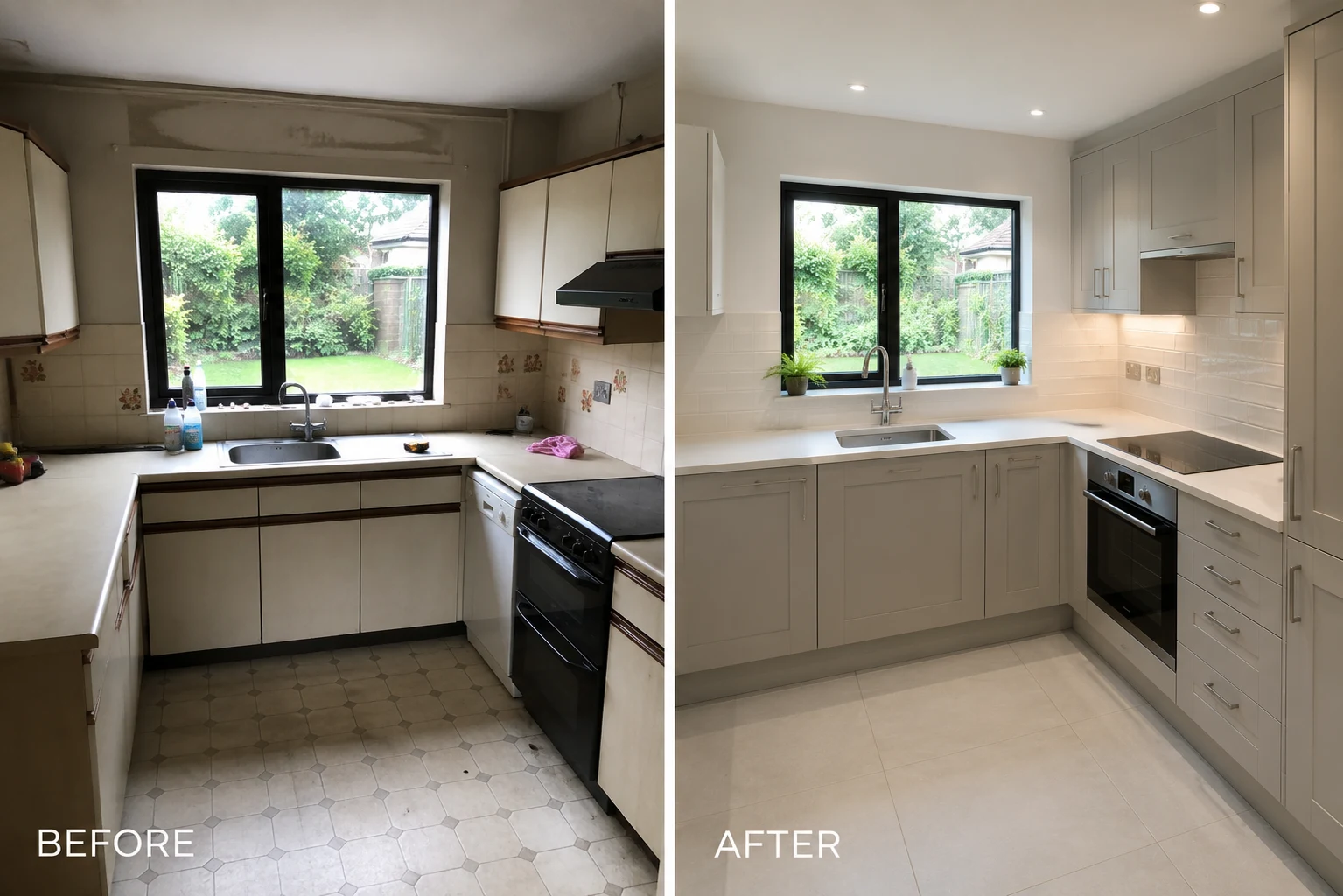
Real examples are often more useful than isolated product images. They show how cabinet colours, worktops, layouts, appliances and lighting work together in completed homes.
Kitchens4U publishes real kitchen projects showing Dublin and Irish kitchen renovations, fitted kitchens, shaker kitchens, slab kitchens, compact layouts, U-shaped kitchens and open-plan designs. Visit our kitchen projects to see practical examples before finalising your own plan.
Frequently Asked Questions
How do I start planning a kitchen?
Start by measuring the room, setting a realistic budget and listing how the kitchen is used every day. Then decide whether the existing layout works or needs changing. Only after that should you choose cabinets, worktops, appliances and finishes.
What is the best kitchen layout?
The best layout depends on the room and household. L-shaped kitchens suit many Irish homes, galley kitchens work well in narrow rooms, U-shaped kitchens offer strong storage, and island kitchens suit larger open-plan spaces with enough clearance.
How much space do I need for a kitchen island?
You need enough space around the island for people to pass, drawers to open and stools to be used comfortably. If the island makes walkways tight, a peninsula or better cabinet run may be more practical.
What is the kitchen work triangle?
The kitchen work triangle connects the sink, hob and fridge. It helps keep the main cooking, washing and food storage points within a practical route. Modern kitchens may also include zones for coffee, recycling, pantry storage and small appliances.
How long does kitchen planning take?
Early planning can take a few days, but a proper design process may take several weeks once measurements, layout options, quotes, cabinet choices, appliances and worktops are reviewed. Larger renovations usually need more planning time.
Should I choose fitted or flat pack kitchens?
Flat pack kitchens can work well for simple layouts and tighter budgets. Fitted kitchens are usually better where the space is awkward, the kitchen is used heavily, or you want more support with measuring, design and installation.
How many sockets should a kitchen have?
There is no single number for every kitchen. Plan sockets around appliances, worktop zones, the kettle, toaster, coffee machine, air fryer, mixer, charging points and any island or seating area. It is usually better to plan slightly more than you think you need.
Can I redesign my kitchen without moving plumbing?
Yes. Many kitchens can be improved by keeping the sink and dishwasher close to their existing positions while upgrading cabinets, storage, worktops, lighting and appliance zones. This can help control cost and reduce disruption.
What should I choose first, cabinets or appliances?
Plan the layout first, then confirm appliance sizes before finalising cabinet units. Appliances affect cabinet housings, sockets, ventilation, worktop cut-outs and door clearances.
Do I need a kitchen designer for a small kitchen?
A designer can be especially useful in a small kitchen because every cabinet and worktop area matters. Good planning can improve storage, reduce clutter and make the room feel easier to use.
What is the most common kitchen planning mistake?
One of the most common mistakes is choosing the look before planning the function. Door colour and worktop finish matter, but storage, workflow, sockets, lighting and appliance positions affect daily use more.
Should I keep my existing kitchen layout?
If the current sink, hob and fridge positions work well, keeping the layout can save money. If the workflow is poor or storage is limited, a layout change may be worth considering.
What should be included in a kitchen plan?
A kitchen plan should include measurements, cabinet layout, appliance positions, sink and tap position, worktop material, lighting, socket locations, storage details, installation notes and any trade work required.
How do I plan kitchen storage?
List what needs to be stored, then group items by use. Pans should be near the hob, mugs near the kettle or coffee machine, waste near the sink and preparation zone, and dry food near the fridge or pantry area.
Can Kitchens4U help with kitchen planning in Dublin?
Yes. Kitchens4U can help Dublin and Irish homeowners with kitchen design, cabinet selection, worktop planning, appliance layout, storage solutions and installation preparation from the Baldoyle showroom.
Book A Design Consultation
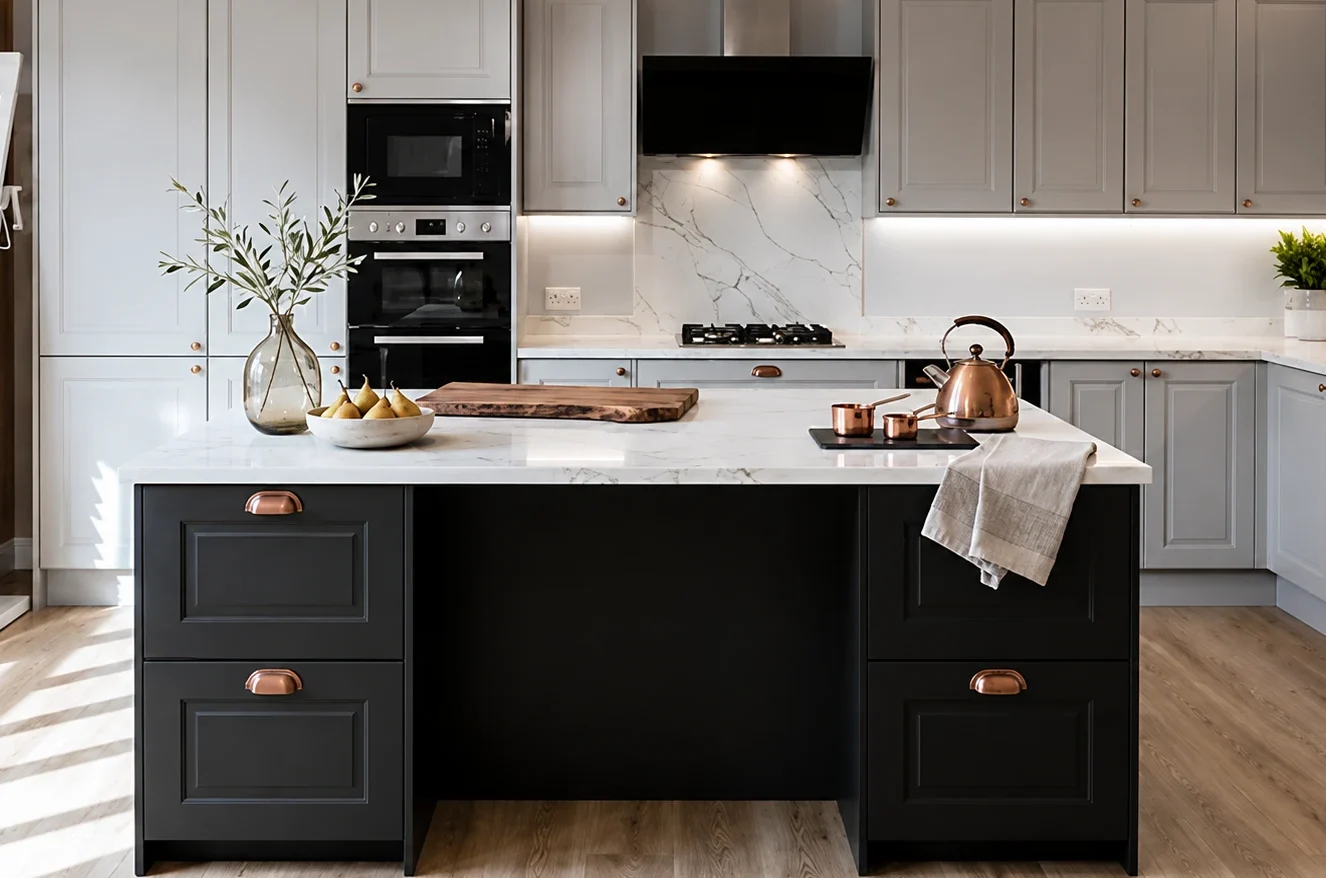
A good kitchen plan is easier to create with accurate measurements, clear priorities and practical design advice. Kitchens4U offers free design consultation, kitchen design, kitchen supply and kitchen installation support from our Dublin showroom.
If you are planning a new kitchen, renovation, fitted kitchen or layout change, our team can review your room, discuss your budget and help you choose a route that suits your home.

