



 Dublin Kitchens

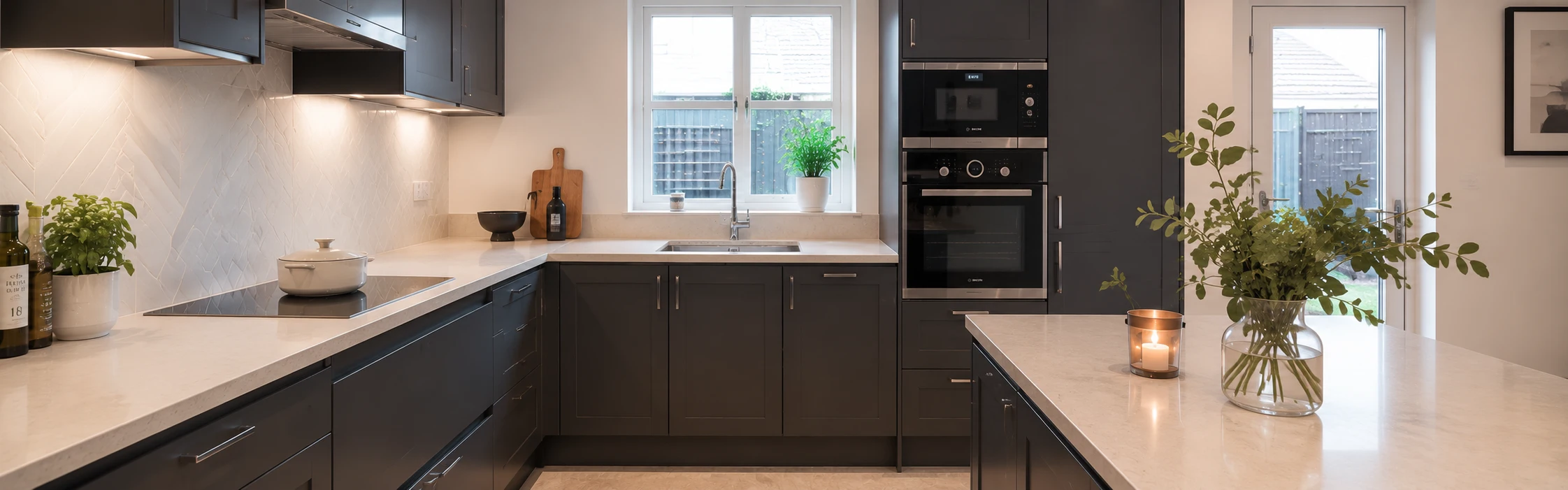
Kitchen installation is the stage where a kitchen design becomes a working room. Good cabinets, worktops and appliances still need accurate fitting. If the installation is rushed or poorly planned, the final kitchen can suffer from uneven doors, poor worktop joints, awkward appliance positions, plumbing issues, electrical problems and a shorter working life.
For many Irish homeowners, the installation stage is also the most disruptive part of the project. The old kitchen may be removed, walls may need preparation, cabinets need to be levelled, worktops have to be measured and fitted, and appliances need the correct space and services. Small errors at this stage are easy to see and hard to ignore once the kitchen is in daily use.
This Kitchen Installation Ireland guide explains what is involved in fitting a new kitchen, how long installation can take, what affects cost, where mistakes happen and why planning the installation properly matters as much as choosing the kitchen style.
Kitchen Installation Across All 26 Counties
Kitchens4U provides professional kitchen installation across all 26 counties of the Republic of Ireland. Share your location and project details to discuss the scope, quotation and schedule. Our installation service does not currently cover Northern Ireland.
Professional Kitchen Installation Services In Ireland
Kitchens4U provides kitchen installation and kitchen fitting support for homeowners planning a new fitted kitchen, kitchen renovation or cabinet replacement. Installation can be arranged as part of a wider design, supply and installation project, helping the kitchen move from planning to completion in a more organised way.
- Kitchen Installation: Fitting the kitchen units, panels, plinths, worktops and finishing details according to the agreed design.
- Kitchen Fitting: Practical on-site work including levelling cabinets, aligning doors, securing units and adjusting trims.
- Cabinet Installation: Installing base units, wall units, tall units, drawer packs and appliance housings.
- Worktop Installation: Fitting laminate worktops or preparing for templated stone worktops, depending on the project.
- Appliance Installation: Planning and fitting appliance spaces so ovens, hobs, dishwashers, extractors and fridge freezers sit correctly.
What Is Included In Kitchen Installation?
Cabinet Assembly
Some kitchens require cabinet assembly before fitting. Flat pack kitchens need more assembly time on site, while pre-assembled and fitted kitchen units can reduce this stage. Assembly must be square and stable before the units are installed.
Cabinet Installation
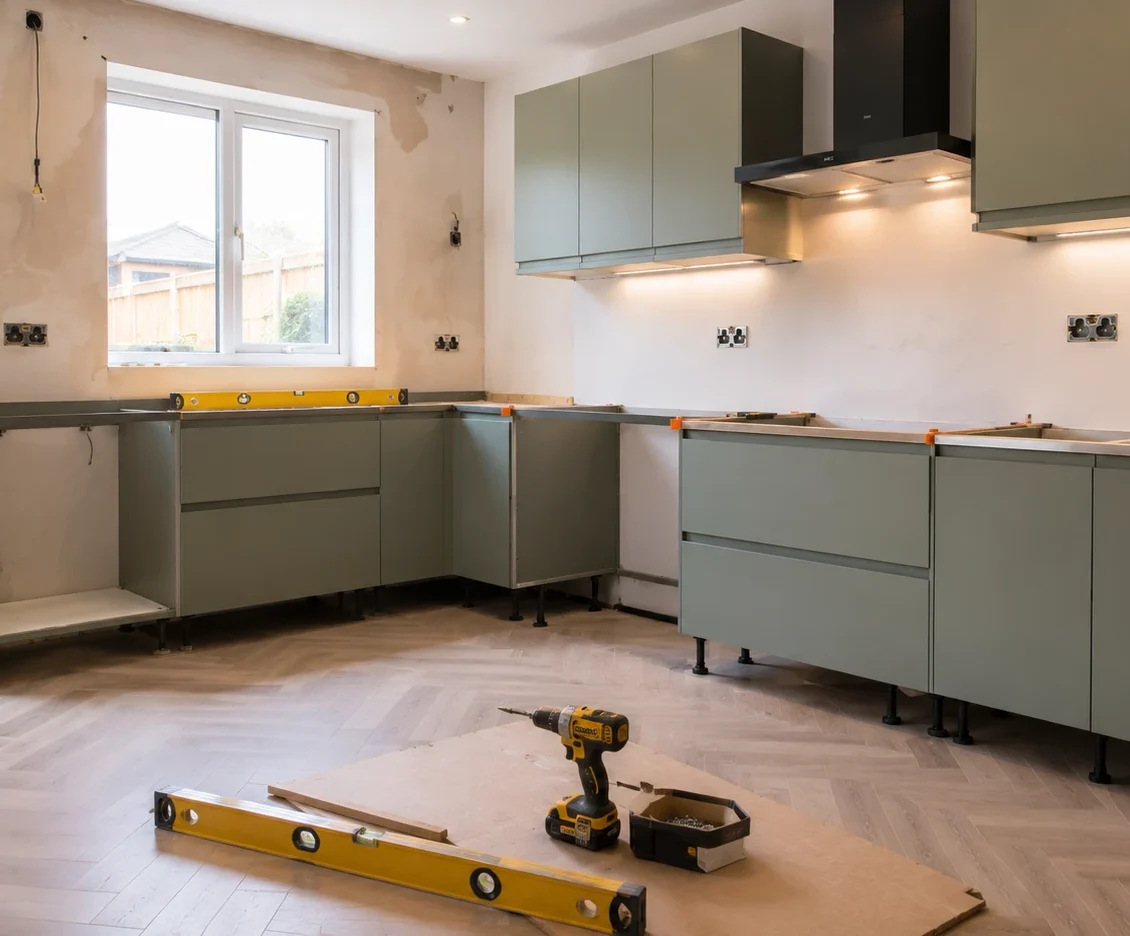
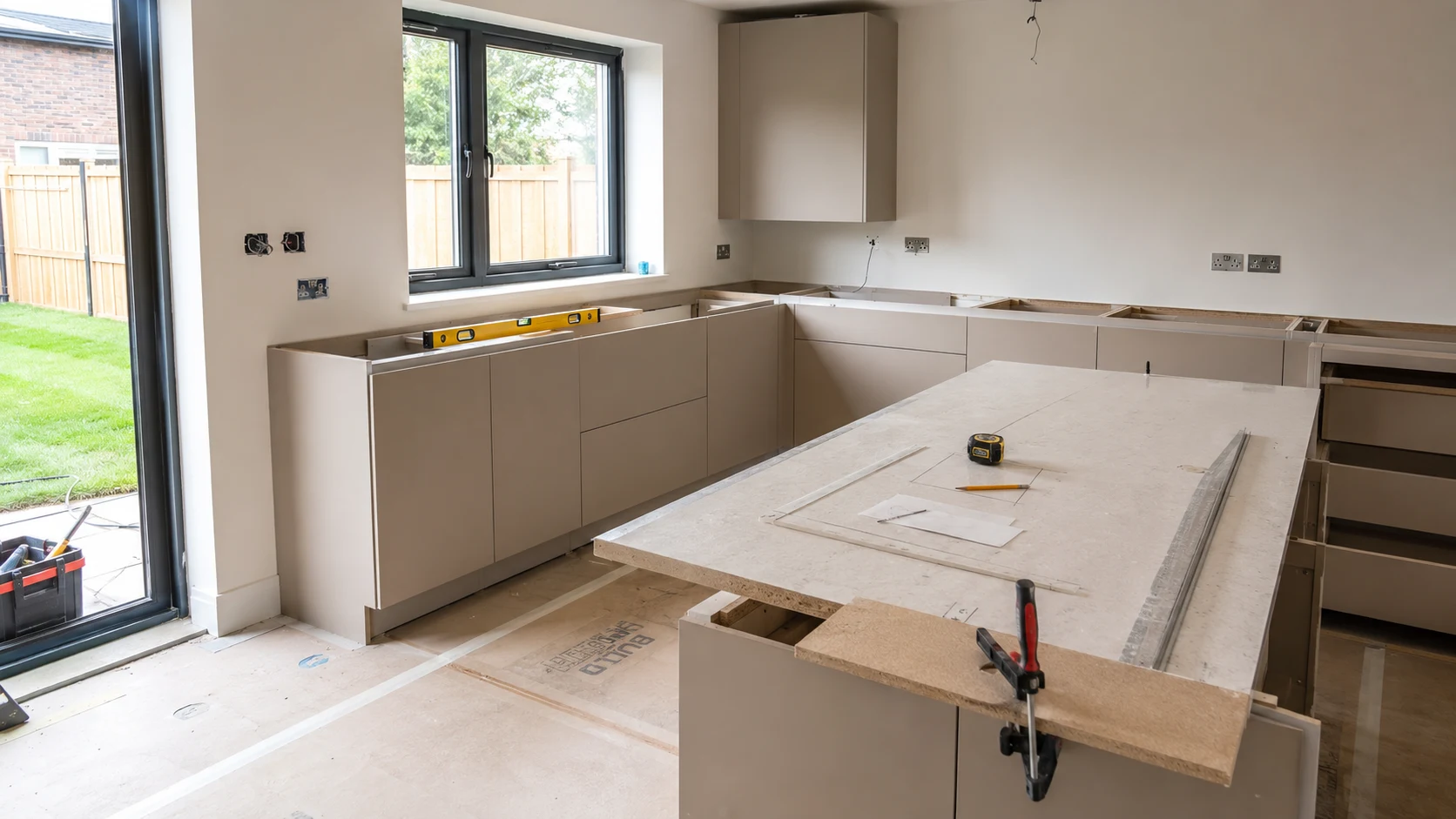
Cabinets are positioned, levelled and fixed securely. This stage affects every other part of the kitchen. If the base units are not level, worktop lines, door gaps and appliance positions can all be affected.
Worktop Installation
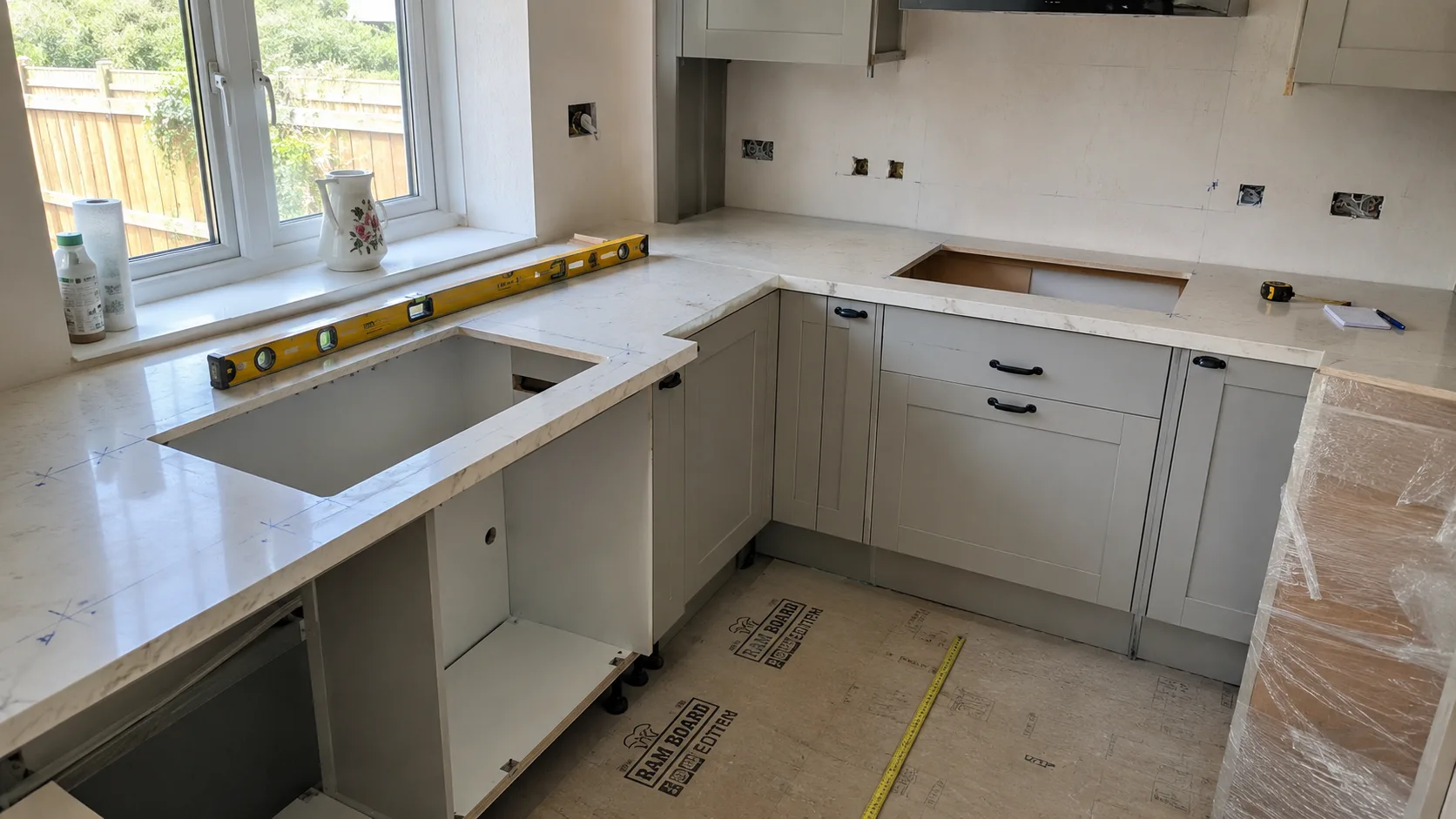
Laminate worktops may be cut and fitted during installation. Quartz, granite or porcelain worktops usually require accurate templating after cabinets are in place. Sink, hob and drainer positions need careful checking before cutting.
Appliance Fitting
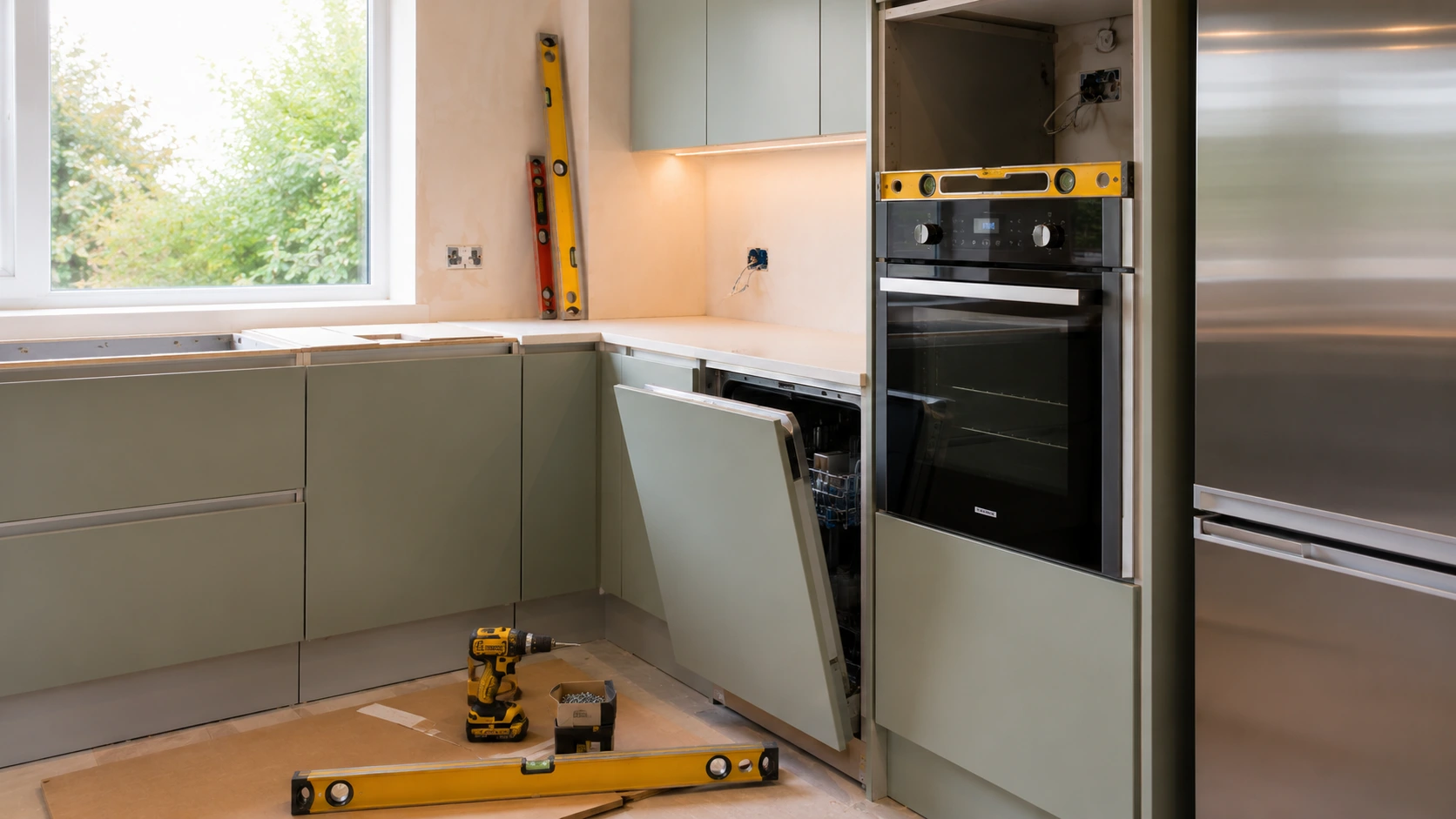
Appliances need correct clearances, ventilation, connection points and access. Integrated appliances also need doors and panels aligned so the kitchen looks consistent.
Sink Installation
The sink must be positioned correctly within the worktop and base unit. Waste and water connections need to be accessible, and the cabinet beneath should be protected from avoidable water damage.
Tap Installation
The tap needs a stable fixing point and suitable connection to the water supply. Its position should also work with the sink, splashback and window area where relevant.
Finishing Work
Finishing includes plinths, panels, trims, handles, hinge adjustments, drawer alignment and final checks. These details are what make the kitchen feel properly fitted rather than simply placed in the room.
Kitchen Installation Process
- Step 1 Site Survey: The room is reviewed for measurements, access, wall condition, services, appliance locations and any installation risks.
- Step 2 Final Measurements: Cabinet runs, doorways, windows, ceiling height, pipework and electrical points are checked before final ordering or fitting.
- Step 3 Delivery: Cabinets, worktops, fittings and accessories are delivered and checked against the project plan.
- Step 4 Preparation: The old kitchen may be removed, walls may be prepared and key plumbing or electrical work may be completed before fitting.
- Step 5 Cabinet Installation: Base units, wall units, tall units and appliance housings are fitted, levelled and aligned.
- Step 6 Worktop Installation: Worktops are fitted or templated, with sink and hob positions checked carefully.
- Step 7 Appliance Installation: Appliances are positioned and fitted according to the design and service requirements.
- Step 8 Final Inspection: Doors, drawers, handles, plinths, panels, worktop joins and finishing details are reviewed.
In real installations, small site issues often appear after the old kitchen is removed. Uneven walls, old adhesive, damaged plaster, sloping floors and awkward pipework are common in older homes. A good installer allows for these details instead of forcing the kitchen into place.
How Long Does Kitchen Installation Take?
Kitchen installation time depends on kitchen size, cabinet type, worktop material, appliance complexity and how much preparation is needed. The table below gives practical guide timings.
| Kitchen Size | Estimated Installation Time | Typical Notes |
|---|---|---|
| Small Kitchen | 2 to 5 days | Compact cabinet run, limited appliances and straightforward worktop fitting. |
| Medium Kitchen | 4 to 8 days | More cabinets, appliance housings, sink and tap fitting, panels and finishing work. |
| Large Kitchen | 1 to 2+ weeks | Tall storage, larger worktop runs, integrated appliances and more detailed fitting. |
| Open Plan Kitchen | 1 to 3+ weeks | Island, lighting, additional trade work, more appliances and worktop templating may extend the schedule. |
Stone worktops can affect timing because templating often happens after base units are installed. Plumbing, electrics, flooring and decoration can also add time if they are part of the wider project.
Kitchen Installation Costs In Ireland
Kitchen installation cost in Ireland depends on the project scope. Installation-only work is different from full supply and installation. A simple cabinet fit will cost less than a full kitchen project with worktops, appliances, services and finishing.
| Installation Type | Typical Budget Range | What Affects Cost |
|---|---|---|
| Installation Only | EUR1,500 – EUR6,000+ | Number of units, cabinet type, worktop material, appliance fitting and site condition. |
| Supply And Installation | EUR8,000 – EUR30,000+ | Cabinets, worktops, sink, tap, accessories, delivery, fitting and project specification. |
| Small Kitchen | EUR1,500 – EUR3,500 installation guide | Simple layout, fewer units and limited worktop complexity. |
| Medium Kitchen | EUR3,000 – EUR6,000 installation guide | More units, appliance housings, panels and additional finishing. |
| Large Kitchen | EUR5,000 – EUR10,000+ installation guide | Large layouts, island work, stone worktops, integrated appliances and more trade coordination. |
For wider project budgeting, including cabinets, worktops, appliances and renovation items, see our Kitchen Cost Guide Ireland.
Kitchen Installation For Different Kitchen Types
Fitted Kitchens
Installation Requirements: Accurate cabinet alignment, panels, plinths, worktops, appliance housings and final adjustments.
Advantages: A fitted kitchen can be planned around the room, which helps with storage, workflow and a cleaner finish.
Typical Installation Time: Several days to 2+ weeks depending on size and specification.
Flat Pack Kitchens
Installation Requirements: Cabinet assembly before fitting, careful levelling and more on-site construction time.
Advantages: Lower starting cost and flexible for straightforward layouts.
Typical Installation Time: Often longer than expected if many units need assembly.
Pre-Assembled Kitchens
Installation Requirements: Delivery access must be checked because units arrive already built. Fitting still requires levelling, adjustment and worktop planning.
Advantages: Less cabinet assembly on site and a smoother fitting process than flat pack in many cases.
Typical Installation Time: Often faster than flat pack for similar layouts.
Bespoke Kitchens
Installation Requirements: More detailed fitting, specialist finishes, custom sizes and close coordination with worktop or appliance suppliers.
Advantages: Greater flexibility for unusual rooms and high-spec design details.
Typical Installation Time: Usually longer than standard fitted kitchens due to complexity.
Common Kitchen Installation Mistakes
- Incorrect Measurements: Wrong wall lengths, appliance sizes or service positions can delay fitting and cause rework.
- Uneven Cabinets: If cabinets are not level, door gaps, worktops and appliances will not sit correctly.
- Poor Appliance Positioning: Ovens, dishwashers and fridge doors need clearance and safe access.
- Insufficient Ventilation: Hobs, extractors and integrated appliances need proper ventilation planning.
- Poor Worktop Joints: Bad joints can affect appearance and durability, especially around sinks and corners.
- Incorrect Lighting Placement: Lights should support food preparation, not cast shadows over worktops.
- Ignoring Wall Conditions: Uneven plaster or old tile adhesive can affect cabinet and worktop lines.
- Forgetting Service Access: Plumbing and electrical points should remain accessible where needed.
- Rushed Door Alignment: Door and drawer adjustment is essential, especially with slab or handleless styles.
- Missing Finishing Details: Plinths, panels, fillers and trims are small items that make the kitchen look complete.
Why Professional Kitchen Installation Matters
Professional kitchen installation matters because the kitchen has to work safely and accurately. Cabinets carry weight, worktops need support, appliances need correct spaces and water or electrical services must be planned properly.
- Accuracy: Level units, clean lines and consistent gaps create a better final finish.
- Safety: Appliances, worktops, tall units and services must be installed with care.
- Warranty Protection: Some products may require correct installation for warranty cover.
- Appliance Performance: Ventilation, clearances and stable fitting help appliances work as intended.
- Long-Term Durability: A well-fitted kitchen is less likely to suffer from loose units, uneven doors or poor joins.
Kitchen Renovation And Installation
Kitchen installation is often part of a wider renovation. In those projects, the installation team may need to work around old kitchen removal, wall preparation, plumbing updates, electrical work, flooring and painting.
Renovation installations need more planning because the room can change after the old kitchen is removed. Damaged plaster, uneven floors and old services may need attention before new cabinets are fitted. For more local renovation guidance, visit our Kitchen Renovation Dublin page.
Kitchen Cabinets And Worktop Installation
Cabinets and worktops are the parts of the kitchen most people notice first, but they also carry much of the practical load.
Cabinet Installation
Cabinet installation includes setting out the base run, fitting wall units, aligning tall units, fixing panels, checking plinths and adjusting doors and drawers. Browse kitchen options through shop kitchens.
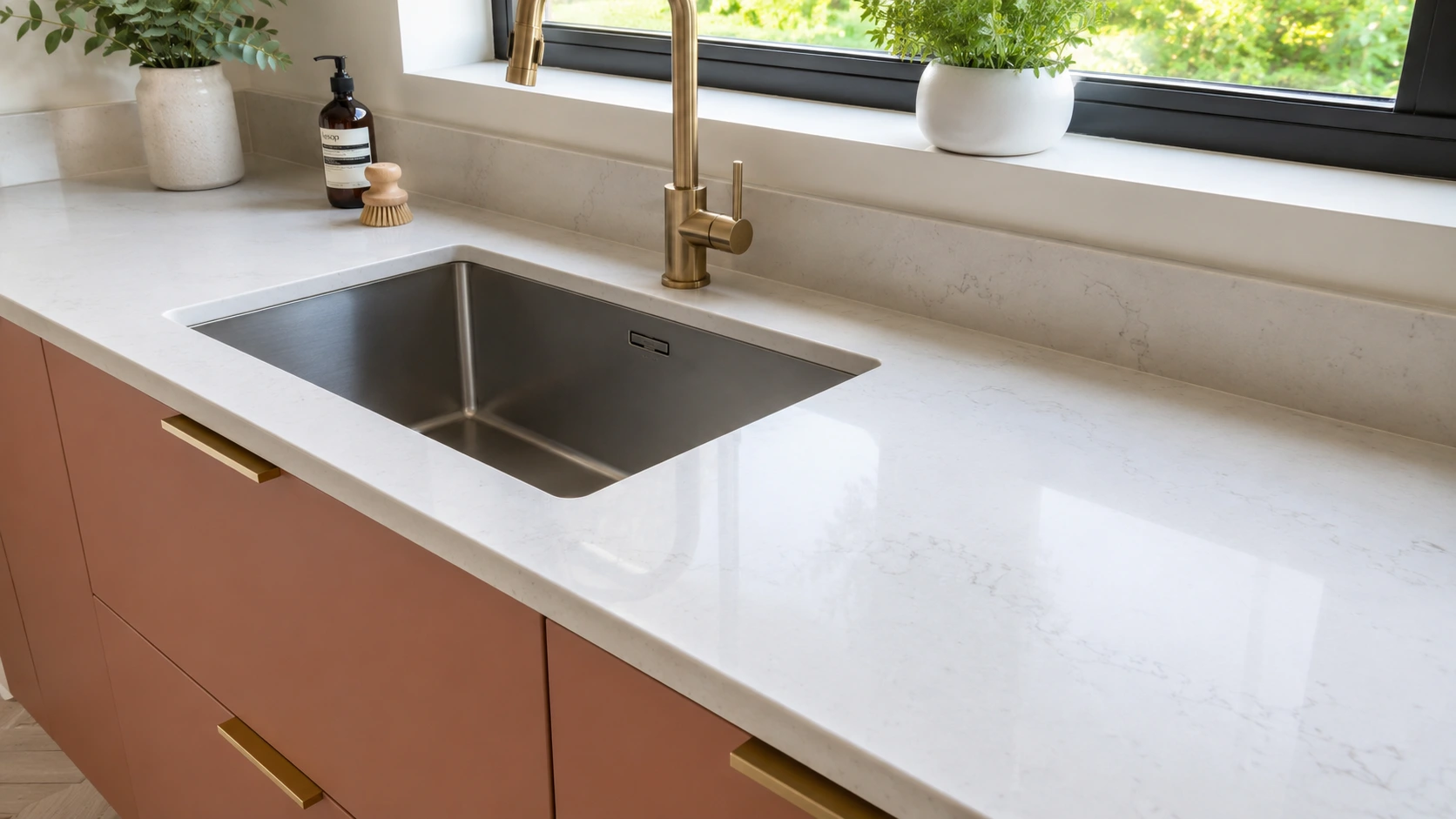
Quartz Worktops
Quartz worktops usually require templating after cabinets are installed. The base units must be level and secure before the stone is measured and fitted.
Granite Worktops
Granite worktops need careful handling and suitable support. Cabinet runs must be prepared correctly before fitting.
Laminate Worktops
Laminate worktops can often be fitted more quickly, but accurate cuts around sinks, hobs and corners still matter. You can compare surface options on our kitchen worktops page.
Fitted Kitchen Installation
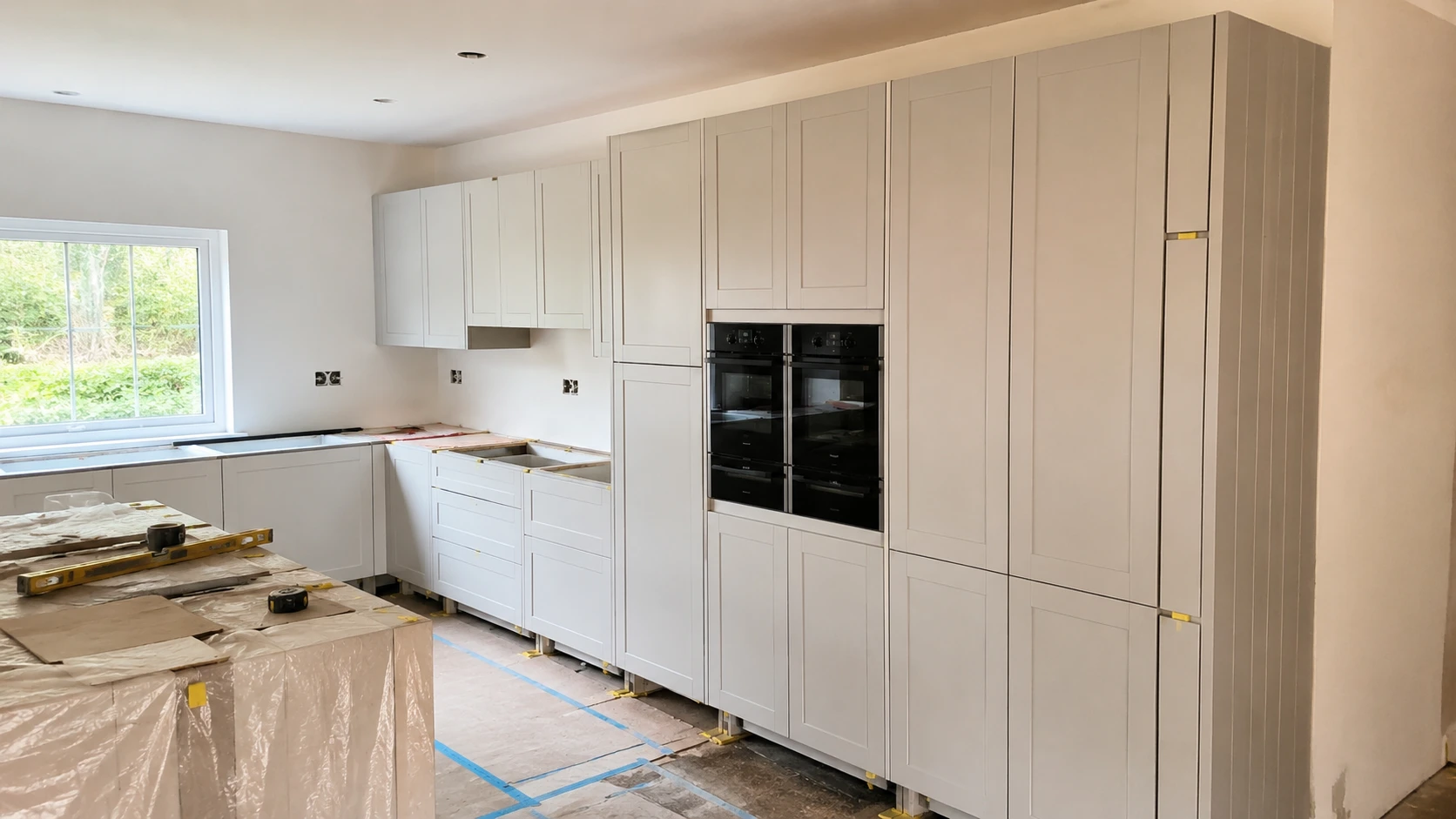
Fitted kitchen installation involves more than putting units in place. The kitchen is installed around the room so the cabinet runs, worktops, appliances, storage and finishing details work together.
The process usually starts with setting out the base units, checking the level, fitting wall and tall units, aligning appliance housings, installing panels and preparing for worktops. Once the main structure is in place, doors, drawers, handles, plinths and trims are adjusted.
For homeowners planning a complete fitted kitchen, our Fitted Kitchens Ireland page explains the design and supply side of the project in more detail.
Why Choose Kitchens4U For Kitchen Installation?
Kitchens4U helps homeowners plan kitchen design, supply and installation from our Dublin showroom. The installation stage is considered as part of the project, so cabinet layout, worktops, appliances and site requirements can be reviewed before fitting begins.
- Dublin Showroom: View kitchen styles, worktops, accessories and cabinet finishes in person.
- Design Service: Plan the layout, appliance positions, storage and finishing details before installation.
- Experienced Installers: Installation knowledge helps reduce avoidable fitting problems.
- Local Support: Work with a Dublin-based team familiar with Irish homes and renovation requirements.
- Supply And Installation: Keep design, supply and fitting aligned as one organised project.
- Nationwide Installation: Professional kitchen installation across the Republic of Ireland.
Recent Kitchen Installation Projects
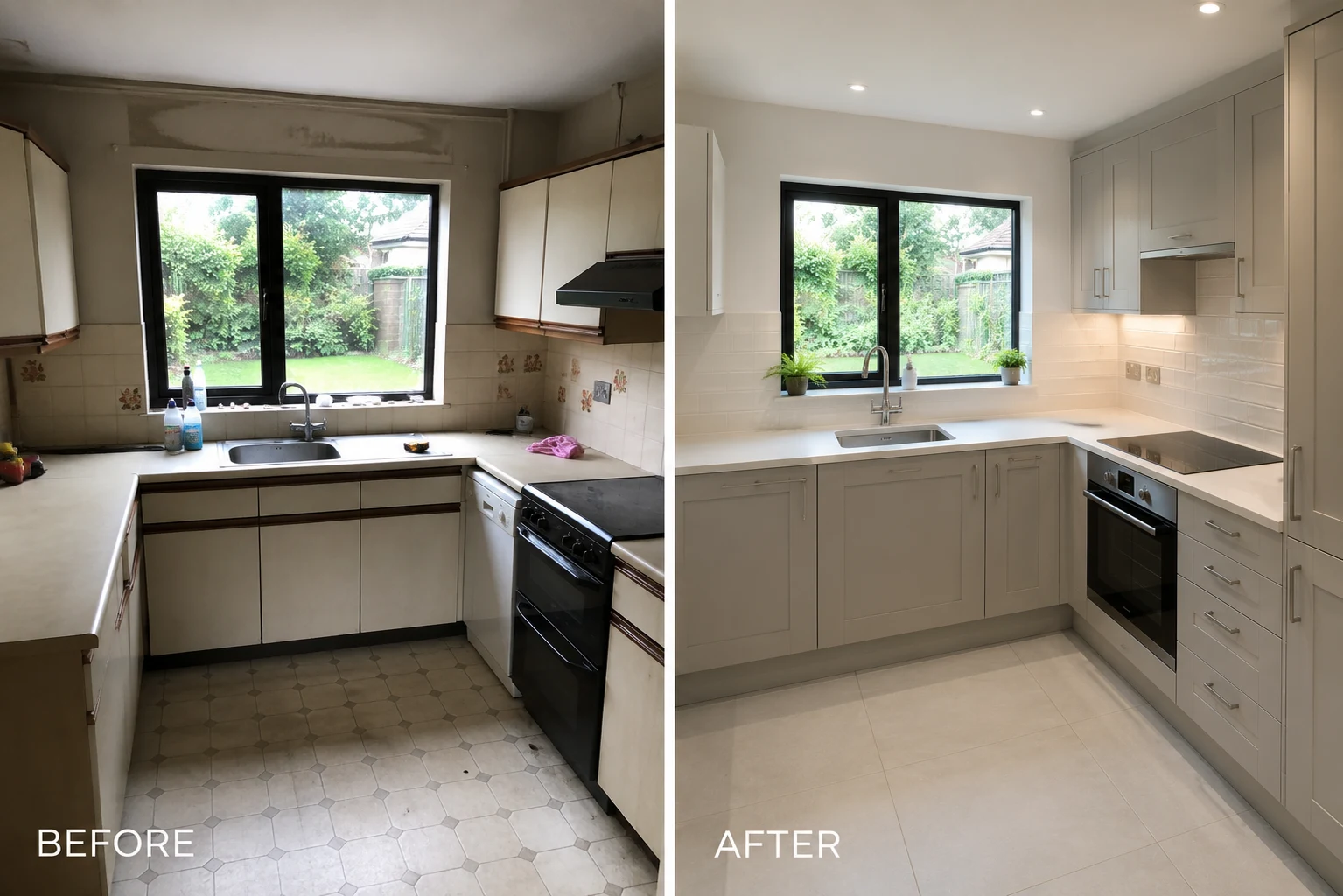
Real project examples help show how installation details affect the finished kitchen. Door alignment, worktop lines, appliance positions, sink areas, panels and plinths are easier to understand when seen in completed homes.
Visit our kitchen projects to view recent Kitchens4U case studies and see how different cabinet styles, worktops, layouts and installation details come together in real spaces.
If you are still comparing layout options before installation, our Kitchen Planning Guide can help you prepare the right questions before a consultation.
Browse examples of our completed kitchen projects in Dublin:
Frequently Asked Questions
How much does kitchen installation cost in Ireland?
Kitchen installation cost in Ireland can range from around EUR1,500 for a small installation-only project to EUR10,000+ for larger or more complex installations. Full supply and installation projects are usually priced as a complete package.
How long does kitchen installation take?
A small kitchen may take a few days to install, while a medium or large fitted kitchen may take one to two weeks or more. Worktop templating, appliances, plumbing, electrics and site preparation can affect timing.
Can I install a kitchen myself?
Some confident DIY homeowners can assemble and fit simple flat pack kitchens. However, accurate measuring, levelling, worktop cutting, appliance fitting and service coordination require care. Mistakes can become expensive to correct.
Do kitchen installers connect appliances?
Installers may fit appliances into the correct spaces, but electrical, gas or specialist connections may need qualified trades. Always confirm what is included before installation begins.
What is included in kitchen installation?
Kitchen installation can include cabinet assembly, cabinet fitting, worktop fitting, appliance positioning, sink and tap fitting, panels, plinths, handles and final adjustments. The exact scope depends on the quote.
Can worktops be installed separately?
Yes. Worktops can be installed separately, but the cabinets beneath must be level, secure and ready. Stone worktops often require templating after the base units are installed.
How long after delivery can installation begin?
Installation can begin once the room is ready, products have arrived and any required preparation work is complete. Delivery should be checked so missing or damaged items do not delay fitting.
Do I need an electrician during installation?
Many kitchen installations need electrical work for sockets, ovens, hobs, extractors, lighting or appliance connections. Electrical work should be planned before cabinets are fitted.
Do I need a plumber during kitchen installation?
Plumbing may be needed for sinks, taps, dishwashers, washing machines and waste connections. If positions are moving, plumbing should be planned before installation.
Can Kitchens4U install a flat pack kitchen?
Kitchens4U can advise on kitchen routes including flat pack, pre-assembled and fitted kitchens. Flat pack installation requires cabinet assembly and careful fitting, so the project scope should be agreed clearly.
What should I prepare before kitchen installation?
Clear the room, confirm delivery, remove personal items, check access and make sure any required plumbing, electrical or wall preparation is arranged before fitting starts.
Can installation start before flooring is finished?
It depends on the flooring type and project plan. Some floors are fitted before cabinets, while others are completed around the kitchen. This should be agreed during planning.
Why are my walls important during installation?
Uneven or damaged walls can affect cabinet alignment, worktop lines and splashback fitting. Older kitchens often reveal wall issues after the previous units are removed.
Is kitchen installation included in the kitchen price?
Not always. Some kitchen prices are supply-only, while others include installation. Always check whether fitting, delivery, worktops, removal, plumbing and electrics are included.
Can I book kitchen design and installation together?
Yes. Planning design and installation together helps ensure the cabinet layout, appliance positions, worktops and site requirements are aligned before the kitchen is ordered.
Do you install kitchens throughout the Republic of Ireland?
Yes. We offer kitchen installation across all 26 counties of the Republic of Ireland. Installation is quoted for your location and project requirements.
Do you install kitchens in Northern Ireland?
No. Our installation service currently covers the Republic of Ireland only.
Book A Free Kitchen Design Consultation
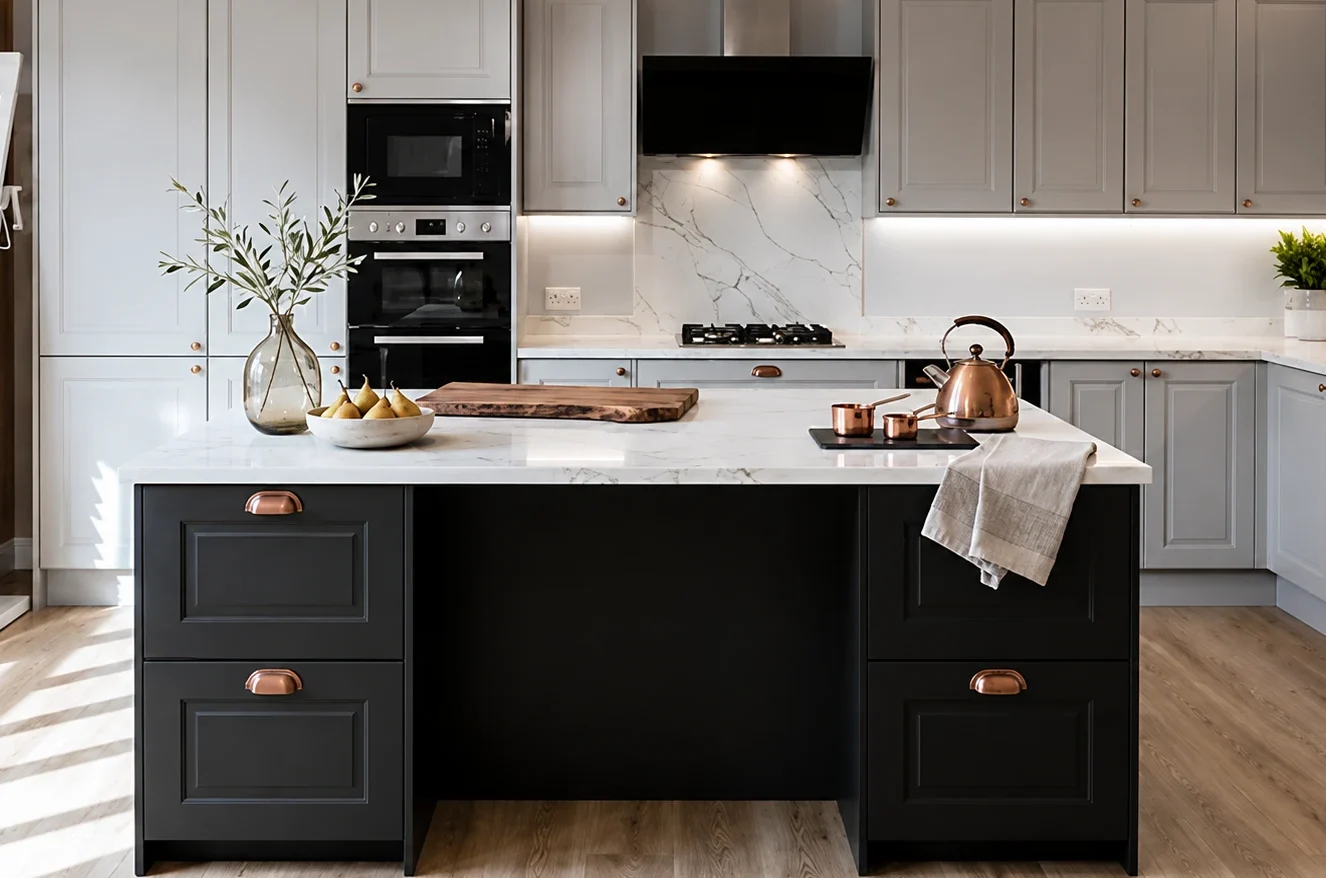
Plan your kitchen design, supply and installation with Kitchens4U, serving homeowners across the Republic of Ireland from our Dublin base. Start with a free consultation to discuss your layout, materials and fitting requirements.

